

Jojoba Oil: The Desert Treasure That Mimics Your Skin
Unlike most vegetable oils, Jojoba Oil is not a triglyceride oil but a liquid wax ester. This unique chemical structure is the secret to its exceptional stability and its profound affinity for human skin.
What Exactly is Jojoba Oil? Beyond a Simple OilThe first and most crucial fact to understand about Jojoba Oil is that it is technically not an oil, but a liquid wax. Source: It is extracted by cold-pressing the seeds of the Simmondsia chinensis plant. Chemical Structure: Most plant oils (like olive or coconut oil) are composed of triglycerides—glycerol molecules attached to three fatty acid chains. Jojoba Oil, however, is composed of long-chain fatty acids and fatty alcohols, forming what chemists call wax esters. Why does this matter? Because the sebum naturally produced by our skin is also composed largely of wax esters. This makes Jojoba Oil biochemically similar to our own skin’s oil. As noted in a review from the Journal of Cosmetic Dermatology, this similarity allows Jojoba Oil to integrate seamlessly with the skin's natural lipid barrier, providing benefits without disruption or greasiness (Ranzato et al., 2011). | 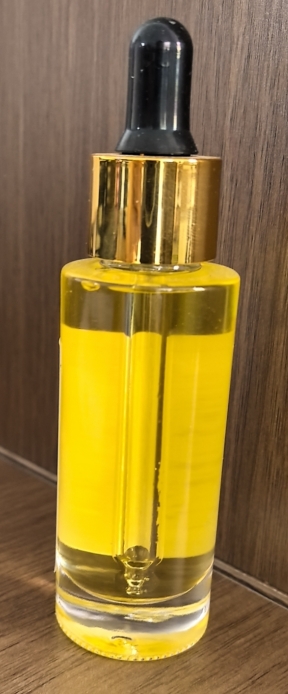 |
Key Properties and Benefits: The Science of Skin Compatibility
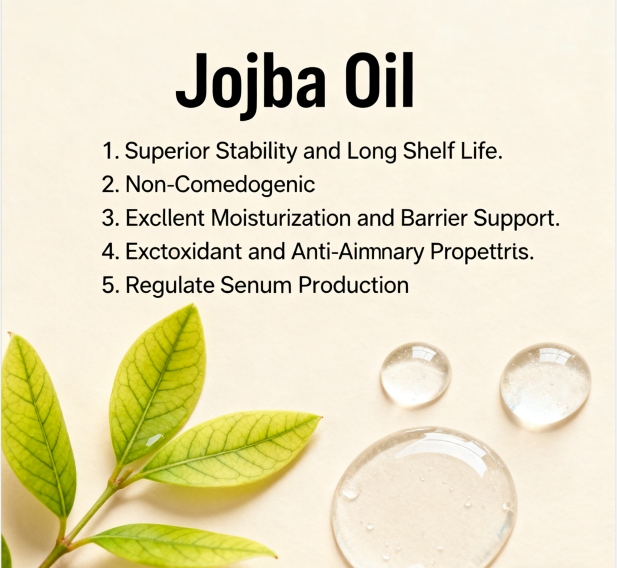
- Superior Stability and Long Shelf Life:
Wax esters are far less prone to oxidation (rancidity) than triglyceride oils. This means 100% pure Jojoba Oil has a remarkably long shelf life without needing synthetic preservatives. - Non-Comedogenic:
Due to its similarity to human sebum, the skin recognizes Jojoba Oil and allows it to be absorbed effectively without clogging pores. It is rated as a 2 on the comedogenic scale, making it an excellent choice for all skin types, including oily and acne-prone skin. - Excellent Moisturization and Barrier Support:
Jojoba Oil acts as an effective emollient, filling in the gaps between skin cells to create a smooth, soft surface. More importantly, it forms a semi-occlusive barrier on the skin. This barrier helps to reduce Transepidermal Water Loss (TEWL), locking in moisture without creating a heavy, suffocating film. - Antioxidant and Anti-Inflammatory Properties:
Jojoba Oil is a natural source of Vitamin E and contains powerful antioxidants. A study published in the Journal of Ethnopharmacologydemonstrated that Jojoba Oil exhibits significant anti-inflammatory activity when applied topically, helping to calm irritation and redness (Habashy et al., 2005). - Regulates Sebum Production:
A common misconception is that applying oil will make oily skin worse. With Jojoba Oil, the opposite can be true. The theory suggests that when the skin's surface is hydrated with a substance that mimics sebum, it can "trick" the sebaceous glands into thinking enough oil has been produced, thereby helping to balance and normalize sebum output over time.
Applications in Cosmetics and Personal Care
Skincare:
- Moisturizers: A key ingredient in serums, face creams, and body lotions for its lightweight, non-greasy hydration.
- Cleansing Oils and Balms: Its liquid wax structure allows it to effectively dissolve and lift away makeup, sunscreen, and sebum without stripping the skin.
- Carrier for Essential Oils: It is the ideal medium for diluting potent essential oils before topical application.
- After-Sun and Soothing Care: Its anti-inflammatory properties make it a gentle, healing treatment for sun-exposed or irritated skin.
Hair Care:
- Scalp Treatment: Massaging Jojoba Oil into the scalp can help to moisturize a dry, flaky scalp and balance oil production.
- Hair Conditioner: It helps to smooth the hair cuticle, reducing frizz, adding shine, and preventing moisture loss from the hair shaft.
- Split End Treatment: A small amount applied to the ends of hair can temporarily seal split ends and improve the appearance of damaged hair.
Nail and Cuticle Care:
- Regularly massaging Jojoba Oil into the cuticles and nail plates can improve flexibility, prevent brittleness, and promote healthy nail growth by providing deep hydration.
Cosmetics:
- It is used as a conditioning agent in lipsticks, lip balms, and makeup products to provide a smooth application and a comfortable feel.
A Closer Look at the Research
Study on Anti-Inflammatory Effects and Wound Healing:
The 2005 study in the Journal of Ethnopharmacology not only confirmed its anti-inflammatory properties but also found that a Jojoba Liquid Wax formulation "significantly enhanced the healing of wounds." The researchers concluded that the application promoted collagen synthesis, a critical factor in skin repair (Habashy et al., 2005).
Study on Seborrheic Dermatitis and Dandruff:
While more research is needed, its moisturizing and anti-inflammatory properties, combined with its ability to balance the scalp's microbiome, make it a promising natural adjunct therapy for managing flaking and irritation associated with dandruff.
How to Choose and Use Jojoba Oil
- Look for Purity: Always choose 100% pure, organic, cold-pressed Jojoba Oil. The color should be a light, golden yellow. A filtered, "golden" version is common, while a refined version is clear and odorless.
- Patch Test: Even with its excellent safety profile, always perform a patch test before widespread use.
Versatile Application:
- As a Serum: Apply 2-3 drops to a damp face after cleansing.
- As a Makeup Remover: Massage a small amount onto dry skin and wipe away with a warm, damp cloth.
- As a Hair Mask: Apply to dry hair and scalp, leave on for 30 minutes, then shampoo as usual.
Conclusion: The Ultimate Botanical Performer
Jojoba Oil is far more than just another plant extract. Its status as a liquid wax ester, mirroring the very composition of human sebum, elevates it to a category of its own in the world of natural cosmetics. It is a stable, non-comedogenic, multi-functional powerhouse that delivers proven moisturizing, anti-inflammatory, and barrier-supporting benefits.